A software factory that closes every loop
Agent Control is our always-on software factory. It runs on user-defined harnesses such as Claude Code and Codex, proves its own work, answers its own questions, and carries what it learns into the next run.
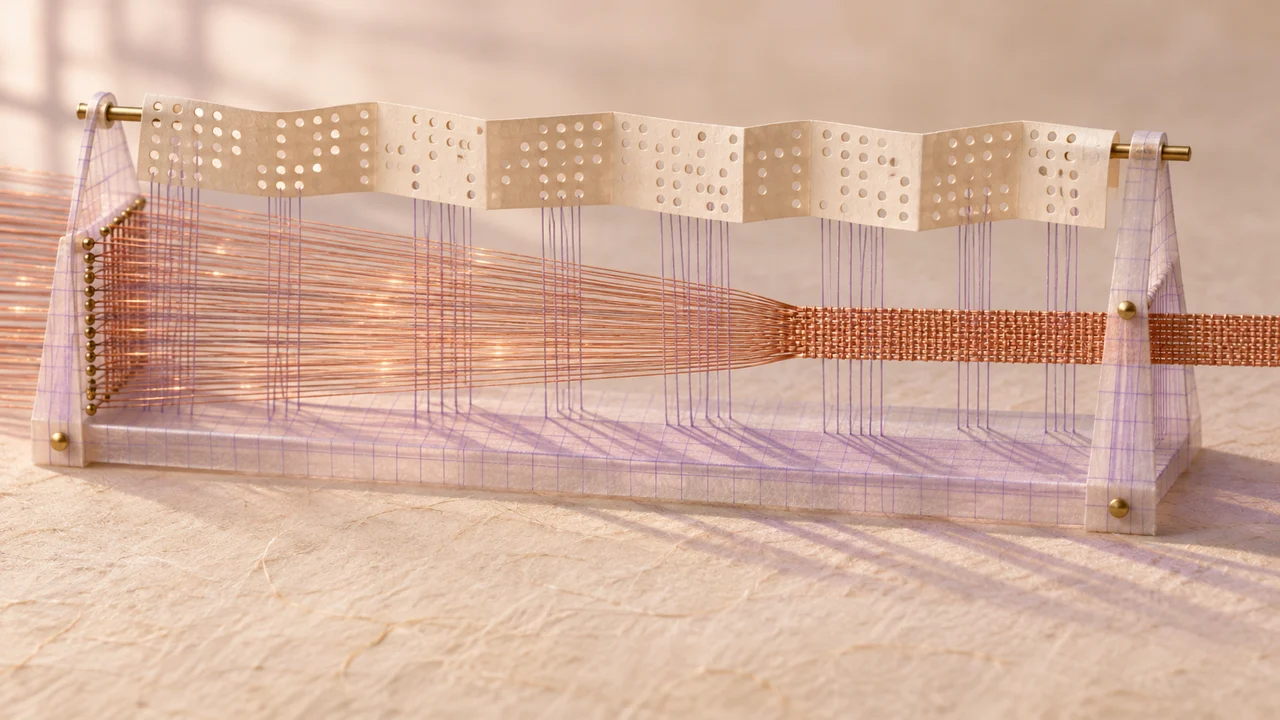
Coding agents can now do real engineering work, and running many of them at once is easy: a few more terminal sessions, or one agent that hands parts of the job to others. What does not scale is the person supervising them. Every agent added is one more stream of results to check, questions to answer and next steps to decide, and all of it lands on the same person's attention. Past a handful of agents, that person has to choose. They can check everything properly, and the agents spend most of their time waiting. Or they can keep the agents moving and check less, and work that nobody verified goes through. Development slows down or quality drops, and each added agent makes the choice harder.
The field's answer over the past year has been the software factory: engineers build the system, and agents build the software. The hard part has moved with it. Writing code is now cheap, and proving that the code works is not. A recent study of industrial software factories found that in one of them at least 5.6% of the issues marked as fixed had not been fixed correctly. A more recent essay argues that the next missing piece is knowledge, because a factory is only as good as what its agents know.
Agent Control is the factory we built and run every day. It runs on user-defined harnesses and treats them as interchangeable workers: which harness fills which role, in any combination, is the user's choice. For our own work we chose Claude Code and Codex. Many epics run at once (an epic is our word for one goal and everything done to reach it), each epic is split into streams, and every stream has to pass every gate before a person sees it.
Agent Control is internal to Multivac Labs today, and we plan to make it available soon. The numbers in this report are internal metrics from a single project: one of our own repositories, where the factory did the software engineering work over 19 days in October 2026. They describe real work, not a benchmark.
A goal comes in on the left and is split into streams. One model drafts each stream, the other builds it, and each checks the other’s work at every station. Work that fails a check goes back. What passes leaves on the right as a pull request for a person to merge.
Tap any station, the board, the memory or the pool to see what it does. Each dot is a stream of work. An orange dot has been sent back. A hollow dot is waiting for a free agent.
- Codex at work
- Claude at work
- The factory itself, no AI
- Sent back
- Waiting for an agent
- Pull request, ready to merge
A factory above user-defined harnesses
A coding agent is a loop: a model calling tools until a task is done. The harness is the environment that loop runs in, and Claude Code and Codex are harnesses. A factory is the layer above, the one that runs many agents as continuous delivery. Agent Control is that layer.
It has three parts. At the bottom are the harnesses, chosen by the user and run exactly as their makers ship them. In our setup those are Claude Code and Codex. In the middle is the factory layer, Agent Control itself, which contains no AI of its own. It is ordinary code that decides who works on what, prepares each workspace, runs the tests, routes every message between agents, decides what each prompt contains, and enforces the rules. Every agent turn is bound to one task, pinned to exact versions of its model, tools and skills, and sealed into a trace when it ends. An agent cannot skip a step, because the steps are not the agent's to arrange.
At the top is a person, at two points only: stating the goal and merging the result. Between those two points, nobody reads the diff. That is defensible only when verification is stronger than a human review would have been, so most of the design goes there.
You
Factory layer Agent Control. Contains no AI.
Harnesses User-defined, run unmodified. Ours are below.
Four loops, all closed
One useful map of this space names four loops: the agent loop, a verification loop around it, an event-driven loop that keeps work moving, and a hill-climbing loop that uses past runs to improve future ones. By its authors' account, most of the attention so far has gone to the first two. Agent Control closes all four.
The agent loop
A model works with its tools until the task is done.
- Codex builds. Claude drafts and reviews.
- Twelve agent seats are shared by every epic and every stream.
- Every session is pinned to exact versions, and every turn is sealed.
The verification loop
Nothing is done until it is proven.
- One frozen commit is carried from the tests to the pull request.
- Whoever wrote something never checks it. The other vendor does.
- Two fresh-eyes checks hold the work to the owner’s own words.
The event-driven loop
Work moves without waiting for a person.
- The factory is always on.
- Agents ask, help and hand over on a shared message board.
- A delegate from a different model family answers for the owner.
The hill-climbing loop
Every run makes the next one better.
- Each epic ends with a review written by an agent from the sealed traces.
- Verified lessons are promoted to project memory.
- Later epics receive them without being asked.
One stream, every gate
The verification loop carries the most weight, and it rests on one rule: whoever wrote something never checks it. The checker is always a different model from the author. In our configuration Claude drafts and reviews and Codex builds, so each checks the other.
It starts with the goal itself. When an epic is planned, the owner's outcomes are written down in the owner's own words and frozen. No agent may reword them, and every later check is made against them.
Claude then drafts each stream: exact instructions for Codex, with numbered acceptance criteria. Before any code is written, Codex checks those criteria against the frozen outcomes, in a fresh session that has seen nothing else. On this project the check found a gap in 326 of 448 runs, at the cheapest moment to fix one.
Codex builds. The factory freezes the result into a single commit and runs the project's checks itself, on a clean copy. Claude reviews what Codex actually did, working from a digest of its whole trace, and a pass has to name that exact commit. Claude can send work back only by naming a criterion that is not met or a check that failed, which rules out endless rounds of taste. That happened in 101 of 326 reviews, and Codex continued in the same session with exactly the named items.
A fresh Claude session, one that never saw the work being done, then checks the finished result against the owner's outcomes. After that the commit is integrated with the streams it builds on, published as a pull request, and held until CI passes on that exact commit. The epic cannot close while any outcome is still unmet.
Claude reads the code and writes exact instructions for Codex, with numbered acceptance criteria. Every criterion has to name one of the owner’s outcomes.
- Claude
- Codex
- The factory, no AI
Agents that talk to each other
The event-driven loop is what removes the waiting, and its centre is a message board. Agents never message each other directly. A question, a finding or a request for help goes on the board, a helper of the right role takes it in a workspace of its own, and the answer returns to the asker with a delivery receipt. Nobody stops working in the meantime. On this project the board carried 1,573 requests.
Questions that would normally go to the owner go first to a delegate: an agent that answers on the owner's behalf, and always a different model from the one that asked. It can answer a question, approve a change of plan, or restart blocked work. It can never merge, publish, spend money or discard reviewed work. The delegate made 291 decisions for us, including 76 approved changes of plan in the middle of a run. Every one is recorded, and the owner can overrule any of them.
Agents never message each other directly. Every request goes on the board, where it is recorded, routed and answered. Nobody stops working while a request is open.
A context module, and knowledge that is verified
What an agent knows at the start of a turn is decided by the factory, not left to chance. A prompt carries only the rules of the step at hand, the owner's objective and outcomes word for word, the exact handoff from the previous agent, and a strict ration of memory: at most five must-knows, three lessons picked by the agent handing over the work, and two rules kept from earlier epics. Everything else is one search away, in files in the workspace and through a recall tool that searches memory, reports and the board together.
Pushed into every prompt
- The rules of this stepOnly the instructions for the step at hand, never the whole playbook.
- The owner’s objective and outcomesWord for word, frozen. No agent may reword them.
- The stream and its environmentWhat to build, in a workspace where the checks already run.
- Notes from other agentsAnswers and corrections, each with a delivery receipt.
- Memory5 + 3 + 2, under 2 KBMust-knows by rule, three picked by the agent handing over, two rules kept from earlier epics.
- The exact handoffThe draft byte for byte, with its hash. For a review, the trace digest and the criteria.
Pulled only when needed
- Memory filesEvery record of the epic, as searchable files in the workspace.
- RecallOne search across memory, reports and the board.
- TracesAny sealed turn of any agent, in full.
- The boardEvery request and every answer.
Two more things are settled before an agent starts. The first is its skills. A skill is a written playbook for one kind of work, such as planning, delivery or review. Each role has its own set, and every session loads one exact version of each, which the trace records. We always know which instructions an agent was working from. The second is its environment. The factory reads the repository's own lockfiles and version files, works out which tools and packages each folder needs, builds that once, and gives every agent workspace and every test run a copy. No agent has to work out how to install the project before it can start.
The same care goes into what the factory learns. Agents record decisions, findings, constraints and open questions as they work, 1,433 of them on this project. When an epic closes, the reviewing agent goes through the whole run from its sealed traces and chooses what later epics should inherit.
Shared knowledge that agents maintain by themselves tends to fill with contradictions. Our answer is that knowledge passes the same gate as code. A lesson can be used inside the stream that wrote it, but it reaches other agents only after the review passes that stream, and it reaches later epics only if the end review keeps it. Each lesson points to the sealed trace it came from. No model ever rewrites a lesson. It can only be replaced or disputed, and its history stays. When accepted work changes a file that a lesson cites, the lesson is marked as possibly stale. So far 139 lessons have been promoted this way, and later epics have used them 488 times.
An agent writes down a finding as it works: what it learned, the file it applies to, and what would go wrong without it. The record points to the sealed trace it came from.
The floor at scale
The factory runs on a shared pool of agents, and the size of each role is a setting. In our setup that is twelve seats: two orchestrators, three Claude drafter-reviewers, four Codex implementers, two checkers and one compute agent. Every epic and every stream draws on the same seats, and one epic has held as many as twenty streams. Work queues for an agent, never for a person.
The picture below is the whole project, turn by turn. Each small bar is one agent turn.
- Build
- Draft
- Review
- Fresh-eyes check
- Plan and close
- Answers and help
- End review
- Pull request
In total:
- 24epics
- 179streams
- 2,783sealed agent turns
- 168pull requests
The peaks were five epics in motion at once and nine agents working at the same moment. Every one of those turns is sealed in full, so any reviewer, human or agent, can read it back.
One afternoon shows what this buys. We started three epics within four minutes of each other. They finished in 9, 11 and 35 hours and opened twelve pull requests, and all twelve are merged into main. Verified pull requests queue up for merge, and each can be tested again against the current main before it lands. What reaches main has been proven against the code as it is now, not as it was when the work began.
What stays with us
Two things stay with a person: the goal and the merge. We state what we want and the outcomes we will judge it by, and we decide what lands. Everything between is the factory's job.
This matters to us beyond software. Our founding essay asked how a system fits itself to the work, how improvement is measured outside the loop, and where collaboration earns its cost. Agent Control is where we study those questions in practice. Every run leaves a sealed record of who did what, what was checked, and what was learned, and that record is the evidence our next reports will draw on.